
The complete guide
How to Choose a Chinese Mahjong Set for Your Table
A mahjong evening is much easier to plan when everyone expects the same game. Sets can look much alike in photos, yet differ in tile counts, markings and the rules they support. Buying by case colour alone can leave you with pieces that do not suit your group.
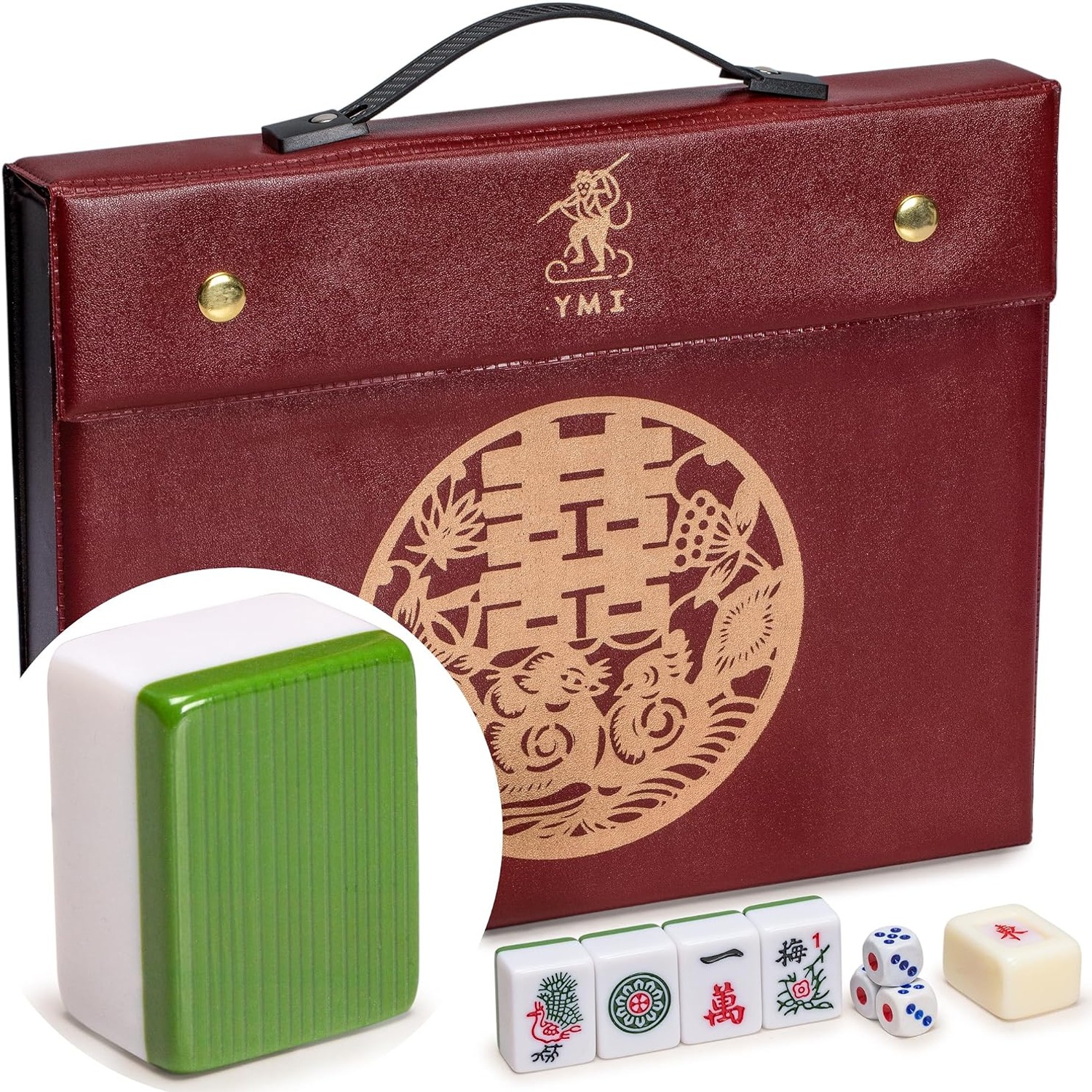
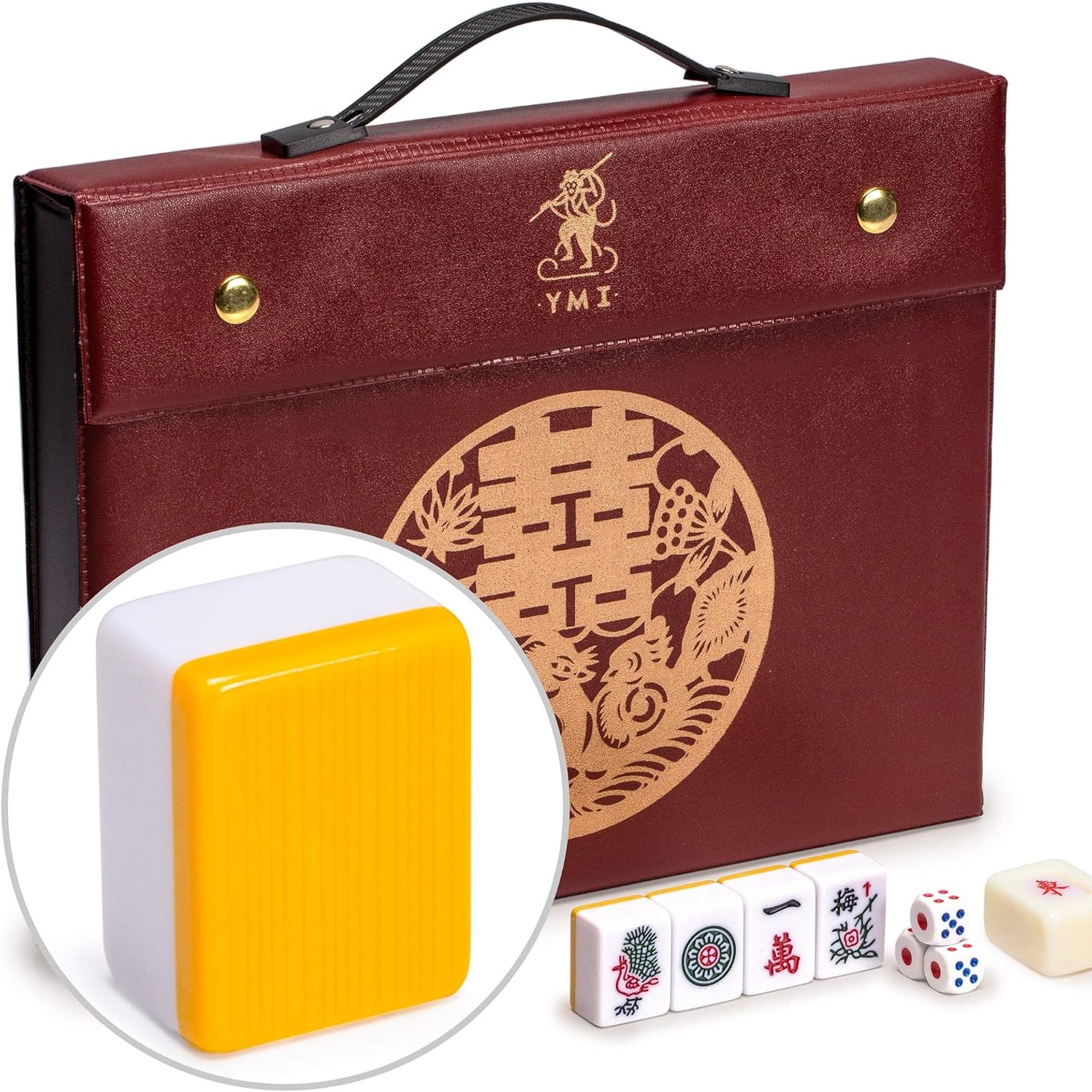
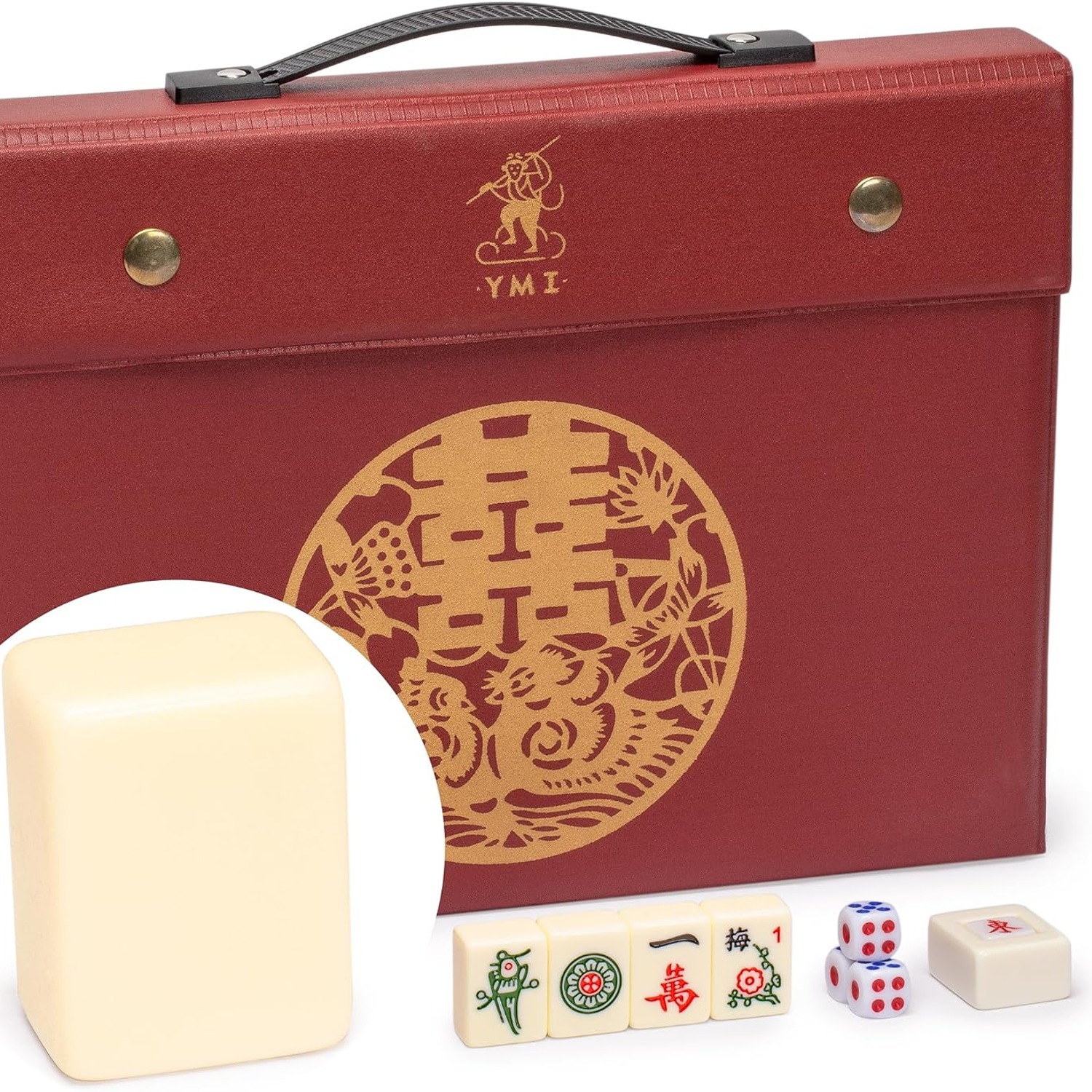
This Mahjong Set is intended for traditional Chinese play. It brings 146 engraved tiles, three dice, a wind indicator and English instructions together with a carrying case. The useful question is whether those contents match the way you want to play.
Here is what to check before you make room for it on your shelf.
Start with the rules your group plays
“Mahjong” covers more than one way to play. Before choosing a traditional Chinese mahjong set, ask the people at your table which rules they use. That answer matters more than most details about the case or tile design.
This set is listed for Hong Kong/Cantonese, Taiwanese and Chinese competition rule variants. It is not intended for American/Western or Japanese/Riichi rules, and it does not contain joker tiles. If your regular group plays one of those other forms, look for a set made for it.
For a new group, choose a rules variant together before the first game. Use the same reference for setup, valid hands and scoring. Even players who know the basic flow may have learned different house rules, so a short conversation at the start can prevent a long pause later.
Know what is in the case
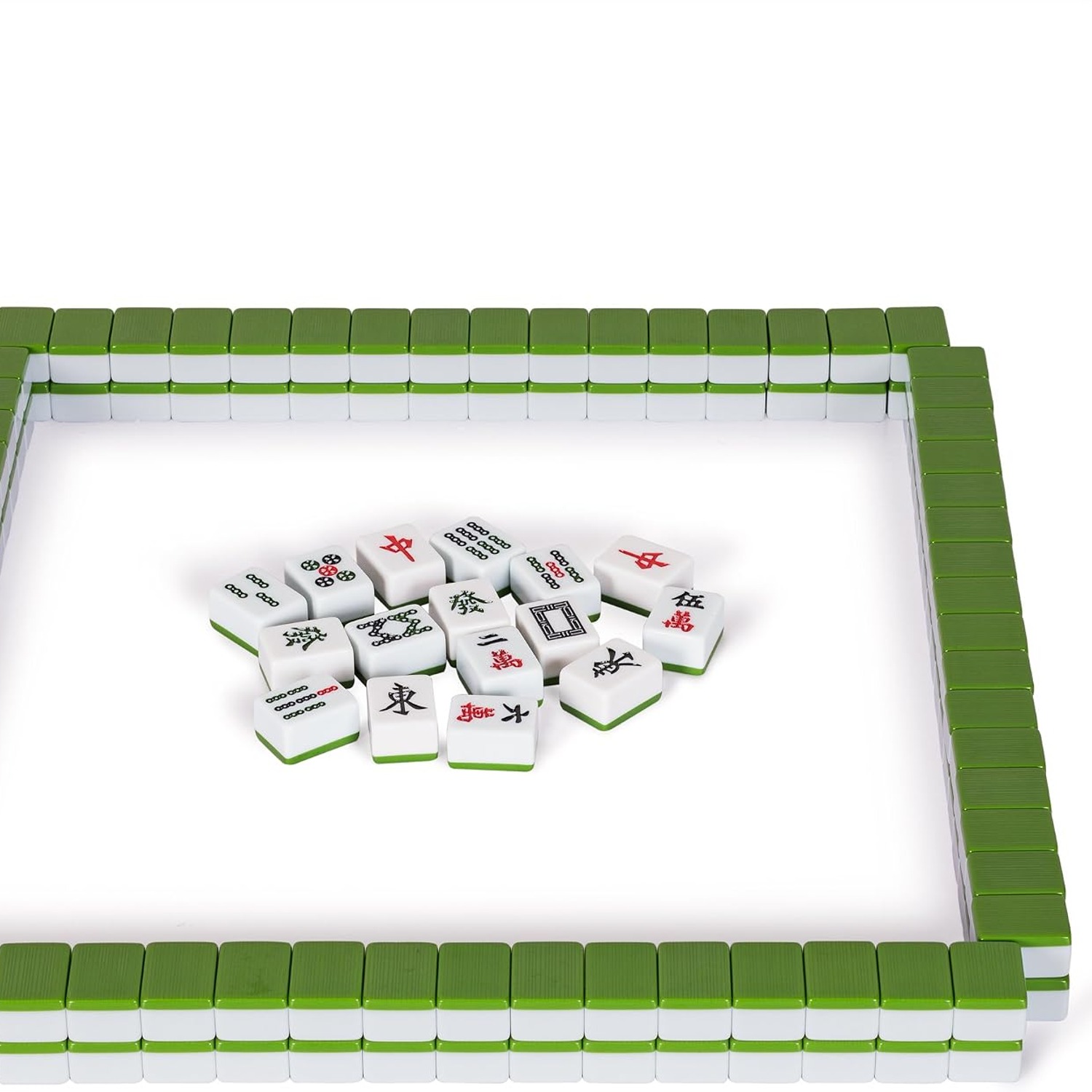
The listed contents include 146 tiles. That total is made up of 36 circles, 36 bamboos and 36 characters, along with 12 dragons and 16 winds. There are also eight flowers and seasons, plus two blank spares.
The spare blanks count toward the total, so do not assume there are 146 distinct playing tiles. Which pieces you put into play depends on your chosen rules. Sort them before the first session rather than treating the whole case as one ready-mixed pool.
The accessories are three dice and an acrylic wind indicator. English instructions are included too. Racks and pushers are not part of the set, so factor those into your plans if your group likes using them.
Look closely at the tile markings
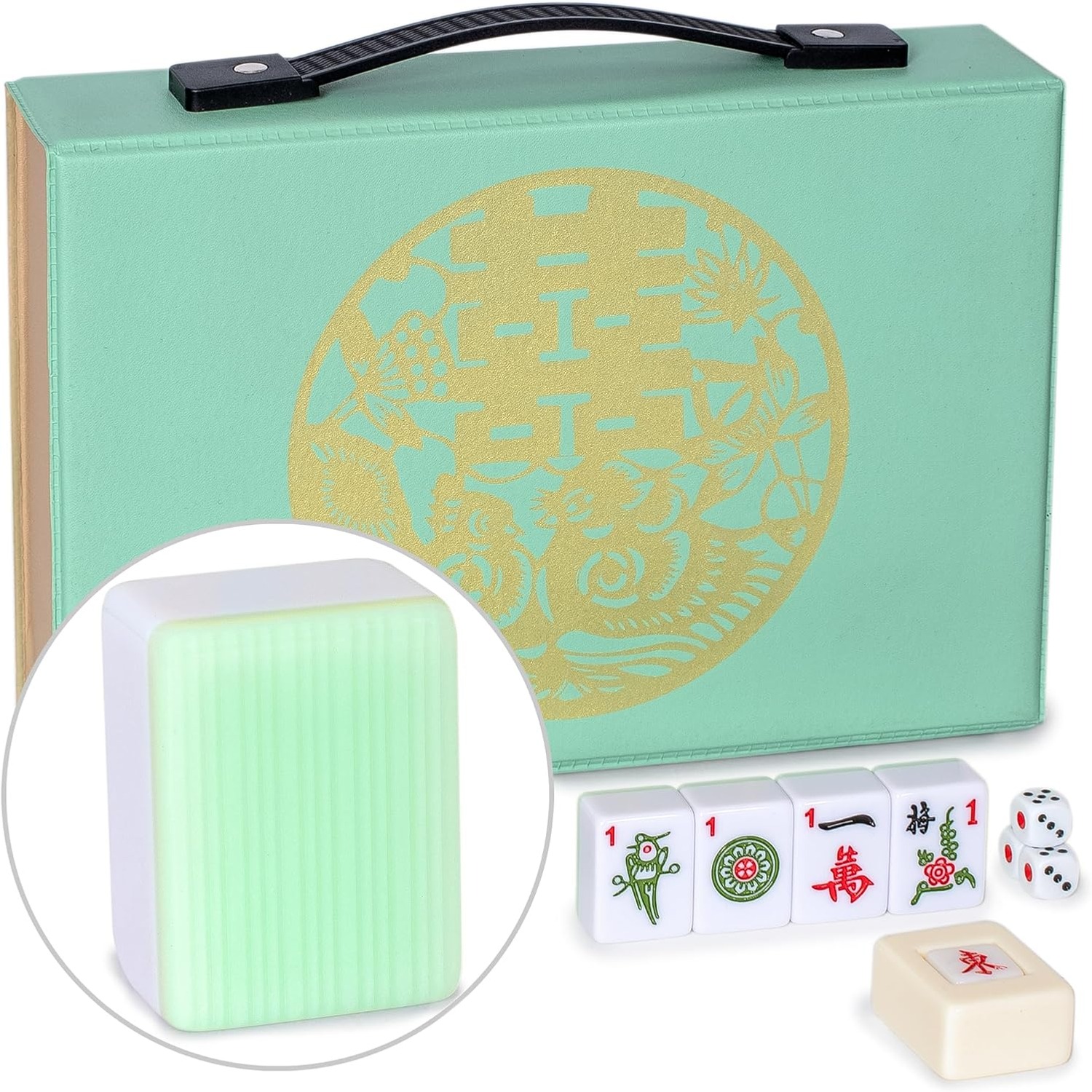
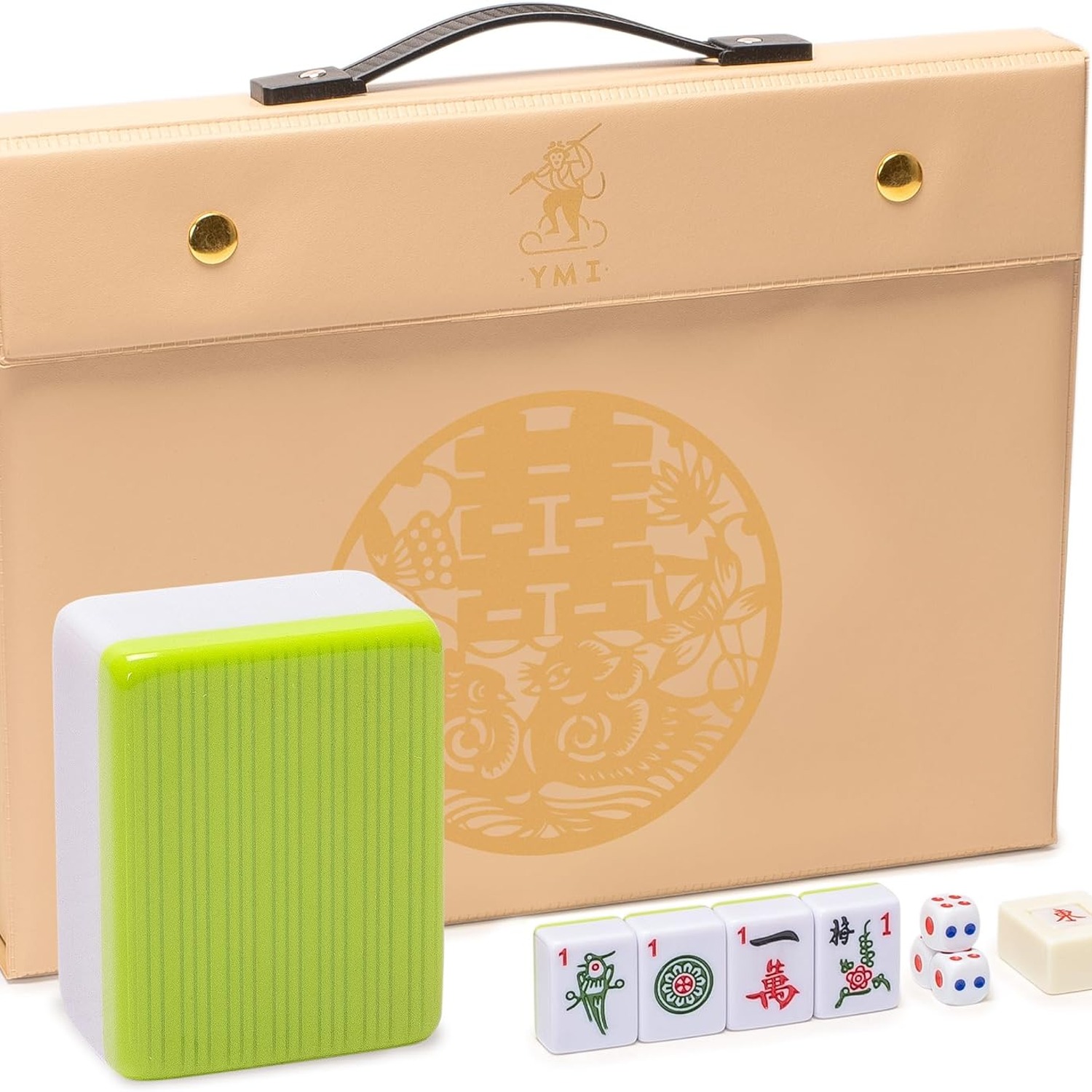
These engraved mahjong tiles use traditional characters and symbols. Western-style numbers appear on the flower tiles only. That is a key detail if you are buying for someone who expects numbers on the main suits.
A new player can learn the symbols, but the first few games may need a slower pace. Leave time to identify tiles and ask questions. An experienced player at the table can help explain what the printed instructions mean during actual play.
If you are comparing options for a learner, think about their comfort with the tile faces. A familiar marking style may matter more to them than the colour of the backs. Do not assume all sets offer the same reading aids.
Check tile size against your preferences
Each tile is listed at 34 × 26 × 19 mm. Those measurements are more useful than a broad size label when deciding whether the pieces suit your hands and table.
If you already own a set you enjoy, measure one of its tiles and compare. If you do not, mark out the listed face size on paper to get a rough sense of scale. Paper cannot show the feel or thickness, but it can make the numbers easier to picture.
The green mahjong tiles have a bamboo-stripe design and are described as engraved melamine. The maker does not state a tile weight or finish rating. Choose based on the known size and design rather than assuming how heavy or smooth each piece will feel.
Plan a table for four players
The listed player count is four, and the stated use is indoors. Choose a table where everyone can sit comfortably and reach the shared playing area without leaning across drinks or other belongings.
Leave room for tile walls, hands and discarded pieces. A crowded table can make learning harder because players spend time moving objects instead of following the game. Put food and drinks on a separate surface where practical.
This is a manual game with no battery requirement. The main preparation is agreeing on rules, sorting the tiles and giving the group enough time to settle in. For a first mahjong game night, a patient pace is more useful than trying to fit in many rounds.
Decide whether you want extra accessories
A mahjong set with dice and a wind indicator covers the listed core accessories, but it does not mean every item your group might want is included. Here, racks and pushers are specifically excluded.
Ask regular players what they prefer before adding anything. If buying accessories separately, check that their dimensions suit tiles measuring 34 × 26 × 19 mm. Do not assume an accessory described simply as “for mahjong” will be the right fit.
You may already have a table setup that works well without extras. Start with your actual needs rather than a long shopping list. The important point is to know what arrives in the box and what you would need to arrange yourself.
Treat the case as part of the decision
The mahjong carrying case is described as burgundy vinyl with a gold emblem, gold-tone snap closures and a handle. It gives the tiles and accessories a shared place between sessions.
That is helpful when the game moves between homes. Before leaving the table, count the dice, locate the wind indicator and check for any tile left under a chair. A case cannot keep the collection complete unless all the pieces go back into it.
The source does not give a handle load rating or describe the case as waterproof. Avoid assuming either feature. Keep the case dry, close it carefully and support it sensibly when moving the set.
Confirm measurements if storage or travel matters
There is an important limit in the maker's details. The structured record lists product dimensions of 32.51 × 24.38 × 4.57 cm and a weight of 1.05 kg. Other parts of the source give different case dimensions and total weights.
Those figures should not be treated as confirmed packed measurements. If the set needs to fit a narrow cupboard, a particular bag or a luggage allowance, ask for the current packed dimensions and total weight before ordering.
This is especially useful when choosing a set for frequent travel. A handle tells you how the case can be carried, but it does not settle how heavy the complete set will be. Confirming that detail is better than planning around an uncertain number.
Think about who will use it
The maker's description places this product in an adult age category, while a separate recommended age field states 14–18 years. It also carries a small-parts choking warning and is not for children under three.
For an adult group, the main buying checks are rules compatibility and tile readability. For a household with younger children, think about where the small pieces will be kept when the game is not in use. Store them out of reach.
As a mahjong gift set, it makes the most sense when you know the recipient plays traditional Chinese rules. Ask about their preferred tiles or consult someone in their group. A quick check can protect the surprise without leaving the important details to chance.
Keep care simple
For routine care, wipe the tiles gently with a soft, dry cloth. If a mark needs a lightly damp cloth, dry the piece before returning it to the case. Avoid soaking the tiles or using abrasive cleaners.
Keep the case and instructions dry as well. Do not pack away damp pieces and close them up for storage. A dry place away from direct heat is a sensible choice for the set between games.
Make a quick count part of packing up. The small accessories are easy to overlook when several people are clearing a table. Keeping everything together is simpler than trying to identify a missing piece just before the next session.
Check delivery and returns before ordering
Check the delivery information for your address, especially if you are buying for a birthday or a planned gathering. Avoid setting a firm game date around an unconfirmed arrival.
The stated return period is 14 days from delivery, with the set unused, complete and in its original packaging. Review the contents and suitability before beginning play. Keep the packaging while you make that decision.
No warranty terms are specified in the maker's description. If cover matters to your purchase, ask for the available terms rather than assuming a particular period or promise applies.
The short version
Choose this Mahjong Set if your group wants traditional Chinese play, engraved melamine tiles with green bamboo-stripe detailing, and a case with dice and a wind indicator included.
Check the less visible details first. There are no jokers, racks or pushers, and the main tiles do not have Western-style numbers. Confirm the packed size and weight if either affects your plans.
When the rules, markings and contents match your table, you can focus on learning the hands and enjoying the next round together.