
The complete guide
Choosing a Roll-Up Mat for Your Unfinished Jigsaw
A half-finished jigsaw can turn a dining table into a puzzle table for days. That is fine until you need the space for a meal, work or something else. Taking the puzzle apart wastes the progress you wanted to keep, while moving it piece by piece is slow.
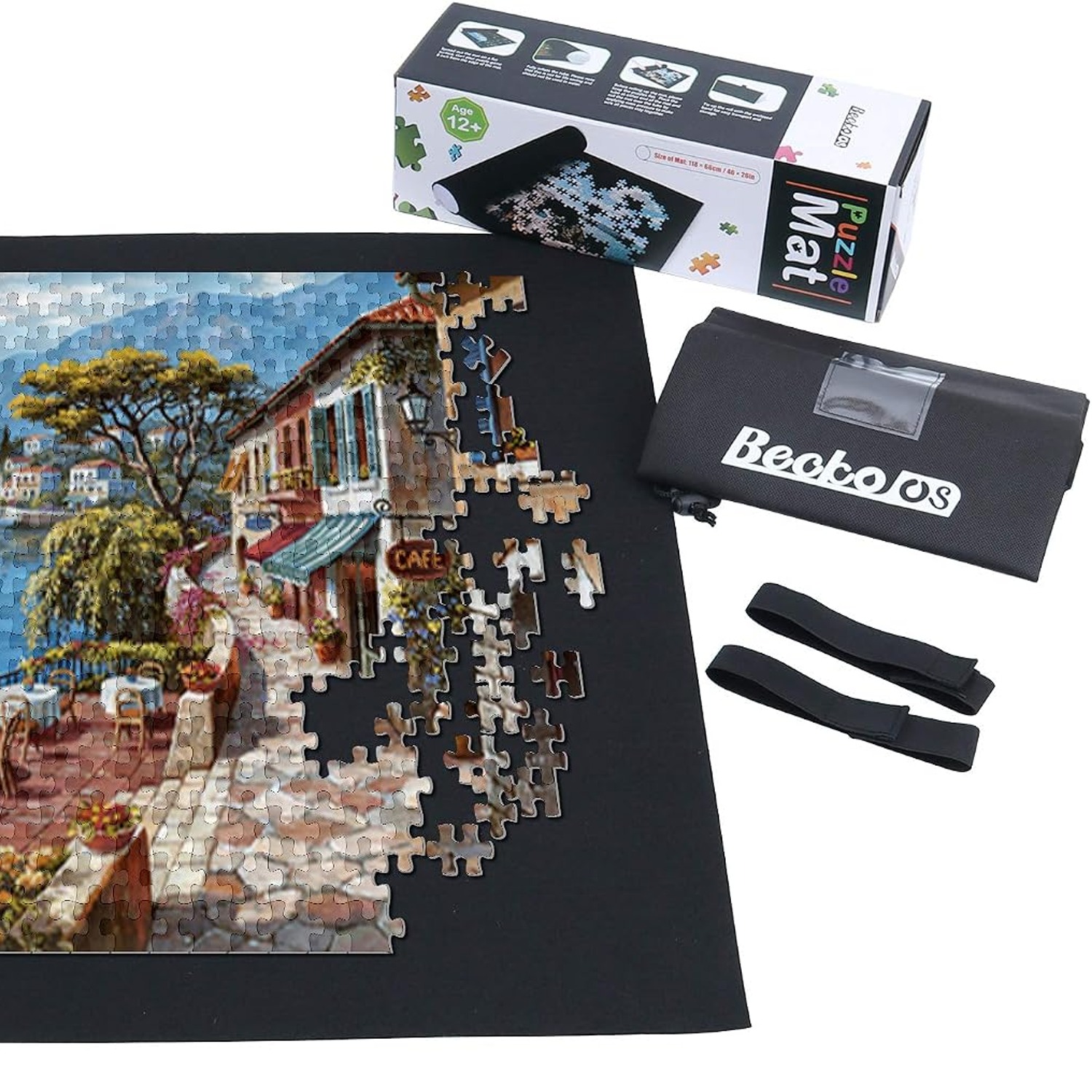
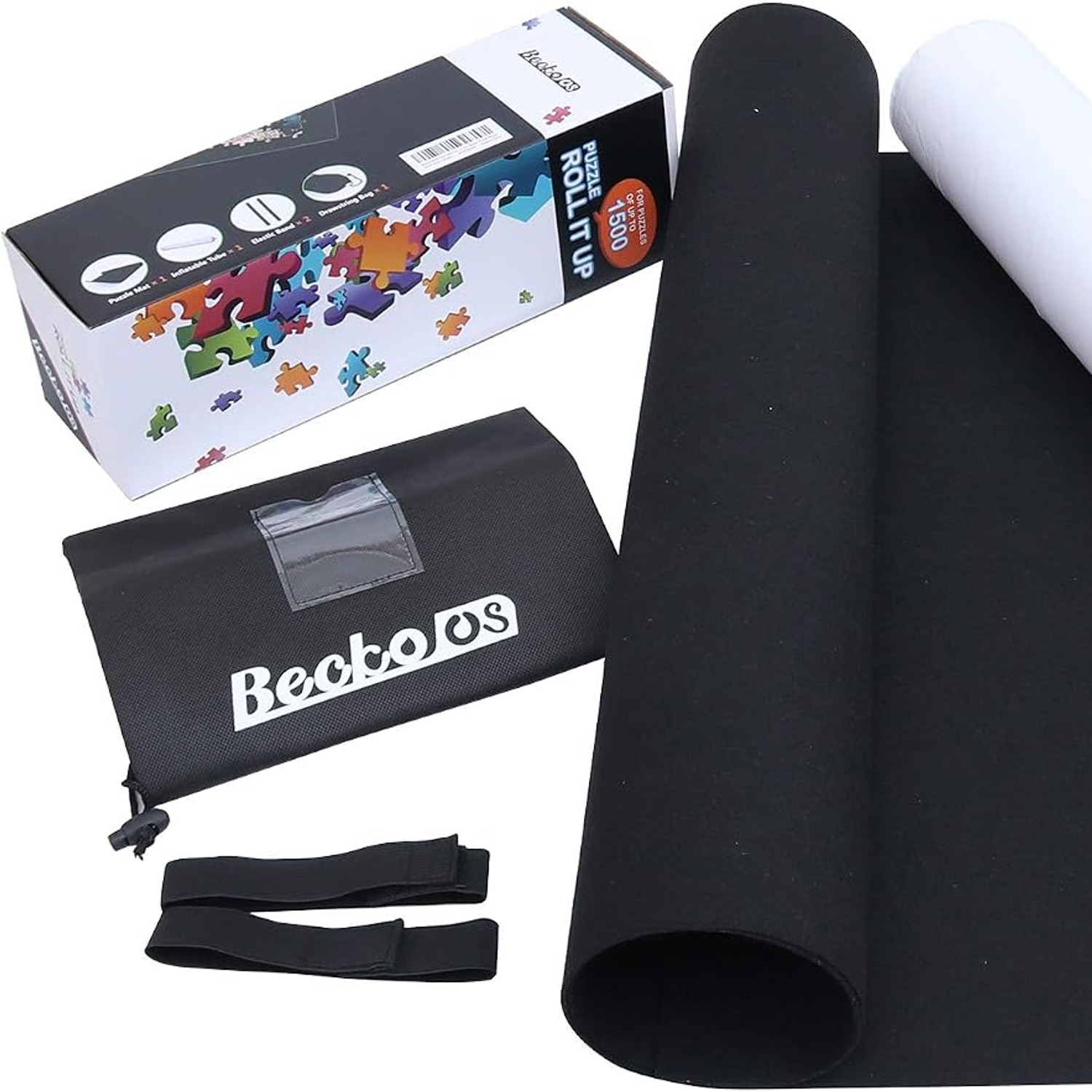
A Jigsaw Puzzle Roll Up Mat offers a way to pause. You build on the mat, then roll it around an inflated tube when it is time to clear the surface. This set includes two elastic bands and a drawstring bag for storage.
The key is choosing it for the right task. It is a flexible storage accessory, not a rigid case. Check the size, understand the rolling method and leave time to pack it away carefully.
What a roll-up mat does
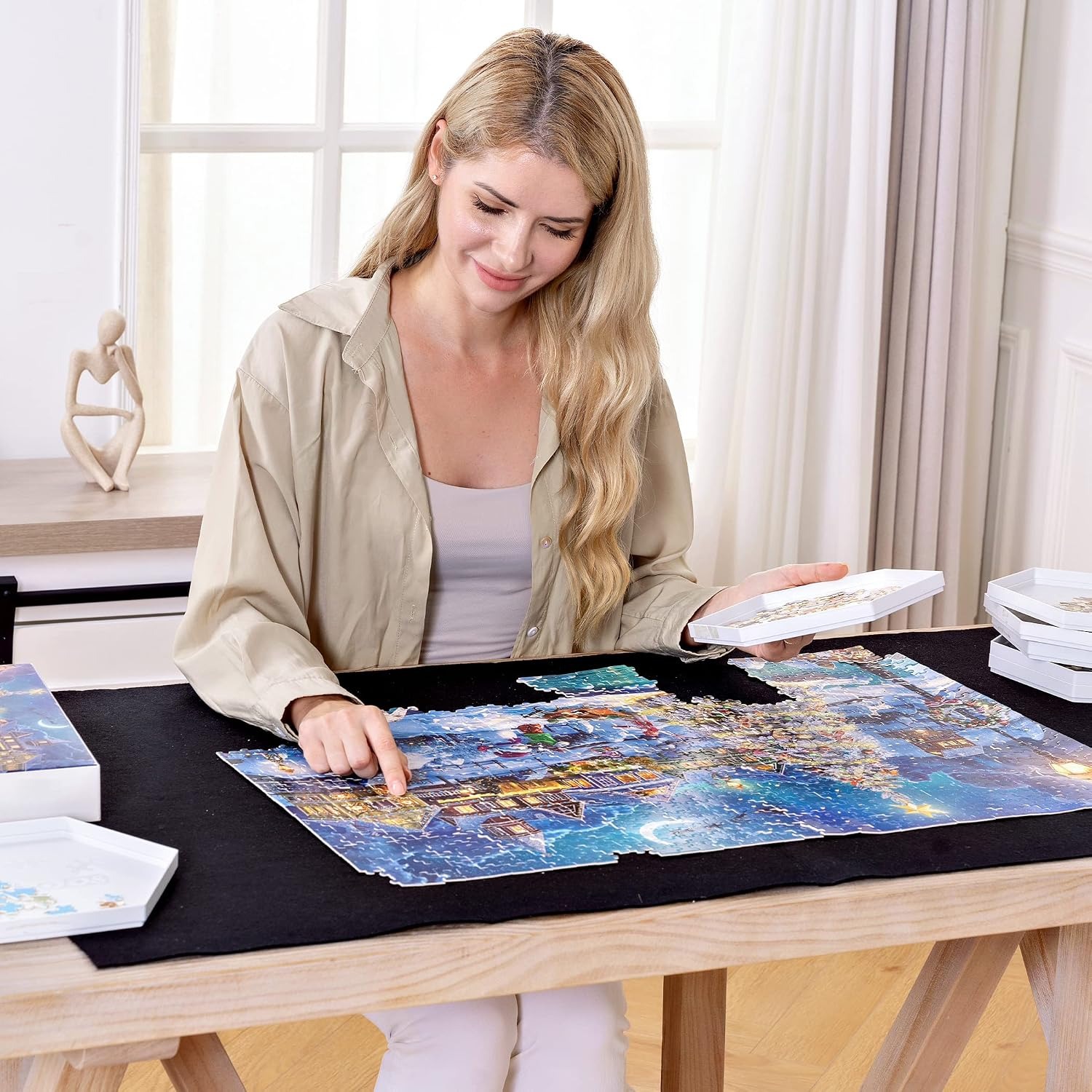
A puzzle mat acts as the working surface beneath your jigsaw. Starting directly on it means you do not have to transfer the unfinished puzzle when you stop. The mat becomes part of your setup from the first edge piece.
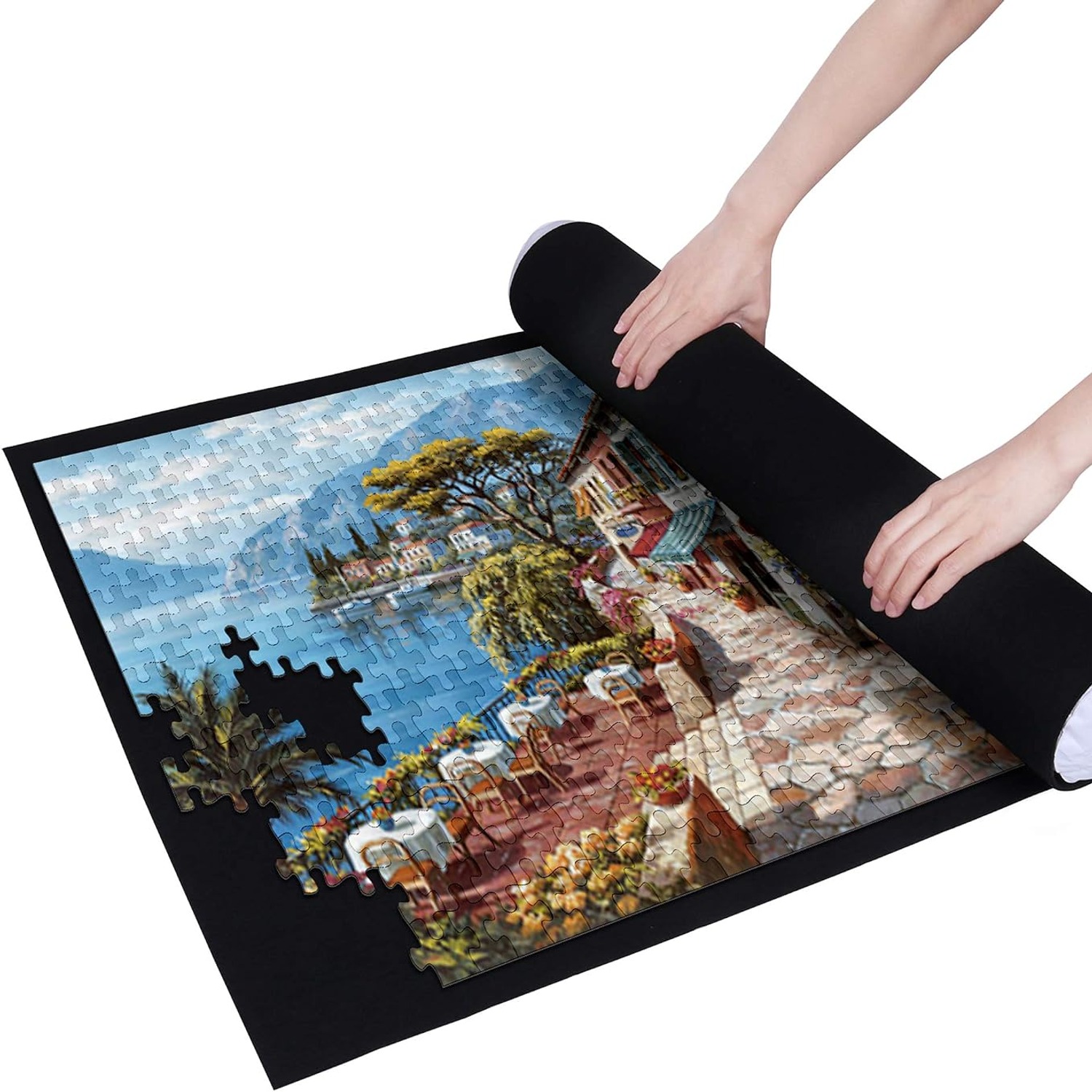
When you need the table, the inflated tube forms the centre of the roll. The mat wraps around it, and the bands help hold the ends together. The bag then provides a place for the rolled mat.
This approach suits a puzzle that takes several sittings. It also gives your hobby a defined place in a shared room. Rather than leaving everything spread across the table, you have a packing routine that you can repeat.
It does not remove the need for care. Flexible puzzle storage can still allow movement, especially if the roll is handled roughly.
Check dimensions before piece count
This mat is listed at 117 × 66 × 0.1 cm and described as holding puzzles up to 1,500 pieces. Treat that piece count as a starting point, not a promise that every puzzle with that number will fit.
Puzzle pieces vary in size. A long panoramic jigsaw and a more compact rectangle can have the same number of pieces but need very different working areas. The finished dimensions on your puzzle box are the better guide.
Compare both sides of the finished puzzle with the mat. Then think about the room you want around it. A puzzle that reaches nearly to every edge leaves little space for sorting or for handling the mat as you begin to roll.
The source also gives slightly different length measurements elsewhere in the maker's description. If your puzzle would be a very close fit, ask for confirmation before ordering. A little spare room is more useful than relying on the last centimetre.
Allow room for the whole setup
Measure your table as well as your puzzle. A tabletop puzzle mat needs a flat surface beneath its working area. If the mat hangs over an edge, that section will not provide the same support while you build.
Think about how you sort. Some people keep all loose pieces beside the growing picture. Others use separate trays or boxes. The finished puzzle may fit comfortably while the full spread of loose pieces takes much more space.
You will also need room to start rolling without catching nearby objects. Clear mugs, lamps and other items away before packing up.
For storage, the flat dimensions do not tell you the size of the finished bundle. Rolled dimensions are not stated by the maker. Check before buying if it must fit a narrow shelf or a particular cupboard.
Know what comes in the set
The package description lists one mat, an inflatable tube, two elastic bands and a drawstring storage bag. The bag has a hanging rope and a slot for a name card. Those details can help when choosing where to store it or identifying it among other hobby supplies.
The product details also list a poster, but do not explain what it shows. Do not assume it is a reference image for a particular jigsaw.
No puzzle is included. This is a set of jigsaw accessories to use with a separate puzzle.
There is also a material inconsistency worth noting. The package description says felt, while another product-detail row says cardboard. The structured material field is blank. If you specifically need a felt puzzle mat, confirm that point before purchase rather than relying on one part of the maker's description.
Set up before placing pieces
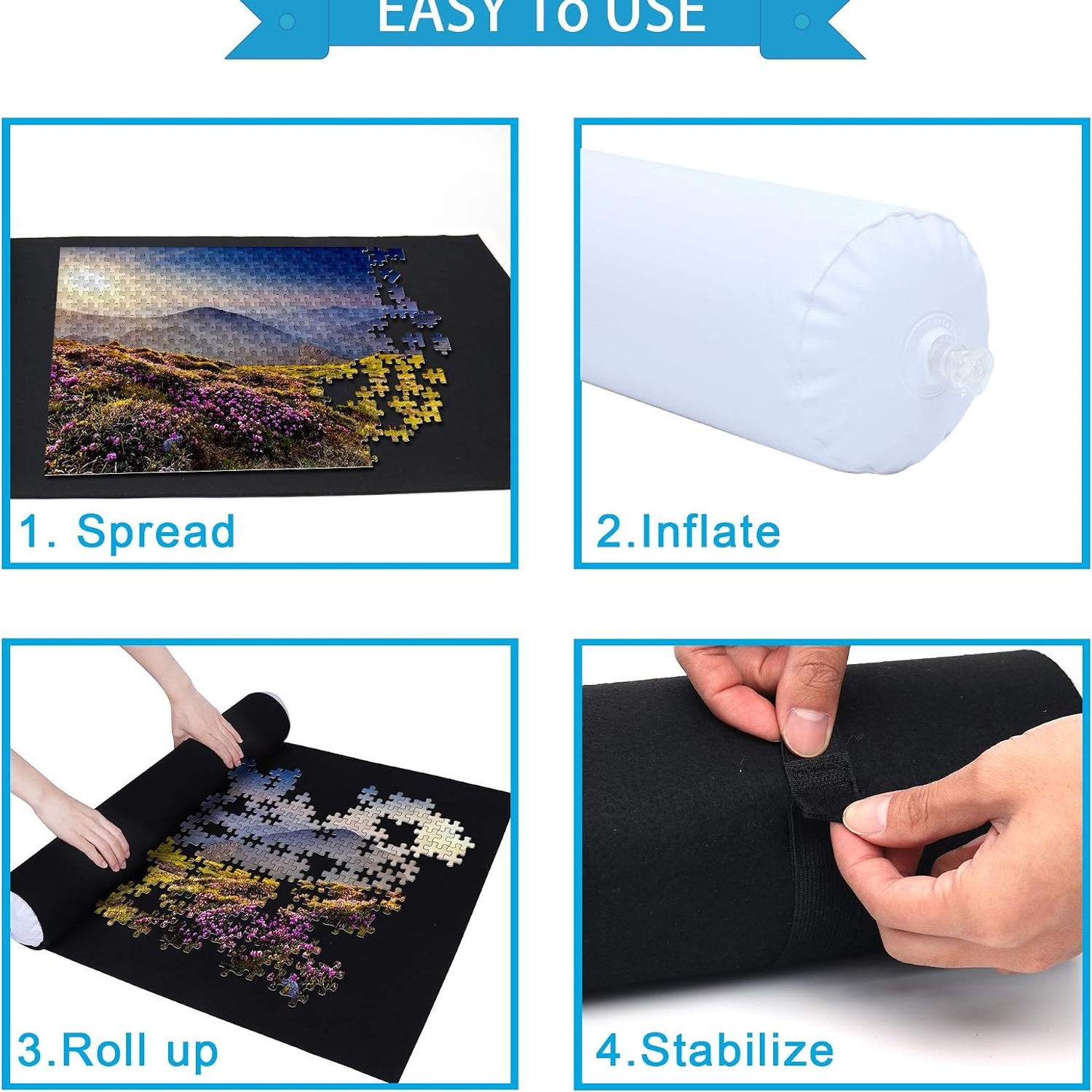
Begin with a clear, dry table. Spread out the mat and flatten it before opening your puzzle. Taking a moment here is easier than trying to adjust the surface after you have built a large section.
Place the puzzle where its full finished shape will fit. For a rectangular design, check its orientation before building the border. It is easy to start along the wrong side when the mat and puzzle have different proportions.
The listed black surface offers contrast with colourful pieces. How useful that feels will depend on the picture you are building. Dark pieces may be less distinct against a dark background than bright ones.
Keep loose pieces within a controlled area. If they spread close to the mat's edges, gather them inward or store them separately before rolling.
Roll slowly and evenly
The supplied directions describe a simple manual process. Inflate the tube, place it at one end of the mat and roll with even pressure.
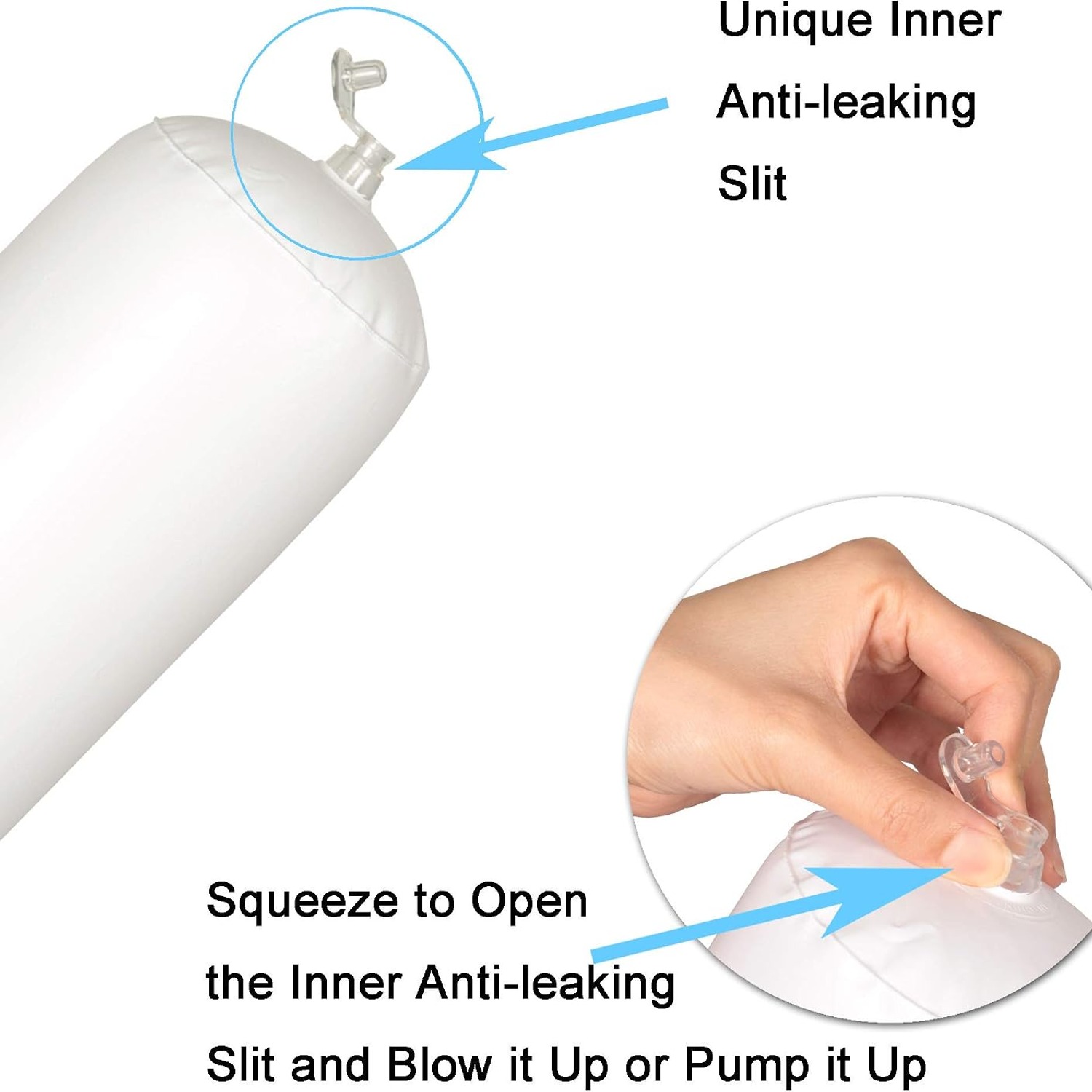
The tube has a slit-style valve. Gently squeeze the valve to open the slit while blowing air into it. The maker describes this design as intended to reduce air leakage, but it does not give an inflation duration.
Before rolling, remove anything that does not belong inside the mat. Check for a pencil, a sorting box corner or a stray object beneath the surface. Then begin slowly, keeping the tube aligned as the mat wraps around it.
Fit the elastic bands around both ends once rolled. They help hold the bundle together, but they are not a reason to squeeze or force it. If the roll looks uneven, pause and adjust rather than pulling harder.
There is no stated guarantee that every piece will remain exactly in place. A careful first trial can help you learn the motion before using it with a larger unfinished section.
Store it with gentle handling in mind
The included puzzle storage bag gives the rolled mat a place between sessions. Carry it with support and avoid dropping, shaking or crushing it against other items.
A portable puzzle mat is useful for moving a project out of the way. That does not make it a hard travel case. If you want to take an unfinished puzzle on a journey, consider how the roll will be handled and what could press against it.
The hanging rope offers another storage option. Choose a location where the bag will not be knocked or caught as people pass.
When you return to the puzzle, clear the table first. Remove the bands and unroll gradually. Check the layout before moving large sections, since some pieces may need a small adjustment.
Decide whether it suits your routine
This puzzle mat for adults may suit someone who builds over several evenings and shares their table with other activities. The listed suggested age is 14 years and up.
It is especially worth considering when your main goal is to reclaim a flat surface between sessions. You trade a short packing routine for the chance to put the project aside.
If your main need is a firm surface that can be lifted without rolling, compare a rigid board instead. If you want long-term display, this product is not described as a frame or mounting system.
The best jigsaw puzzle storage choice depends on how you actually work. Think about your table, your puzzle dimensions and how often you stop, rather than choosing by piece capacity alone.
Care and buying checks
Keep the mat and its accessories dry. For loose dust, use a soft brush rather than soaking the surface. Specific washing and ironing instructions are not given by the maker, so avoid machine washing or heat treatment without confirmed guidance.
Keep sharp objects away from the inflatable tube. Handle the valve gently, and do not force the bands over an awkward roll.
Before buying, check the finished puzzle size, your table space and your planned storage spot. Confirm any detail that matters to you, especially the conflicting material information.
Returns are stated as available within 14 days of delivery for an unused, complete item in its original packaging. Inspect the contents and check suitability before use, and keep the packaging while you decide.
The short version
This roll-up mat is a practical option for pausing a jigsaw and clearing a shared table. Its listed 117 × 66 cm footprint and capacity of up to 1,500 pieces give you a useful starting point for checking fit.
Measure first, leave some working room and roll with care. If that routine suits the way you puzzle, the tube, bands and storage bag give you a straightforward way to put the project aside until next time.